Insights Hub

FinTech Factory LunchTime Series – 12
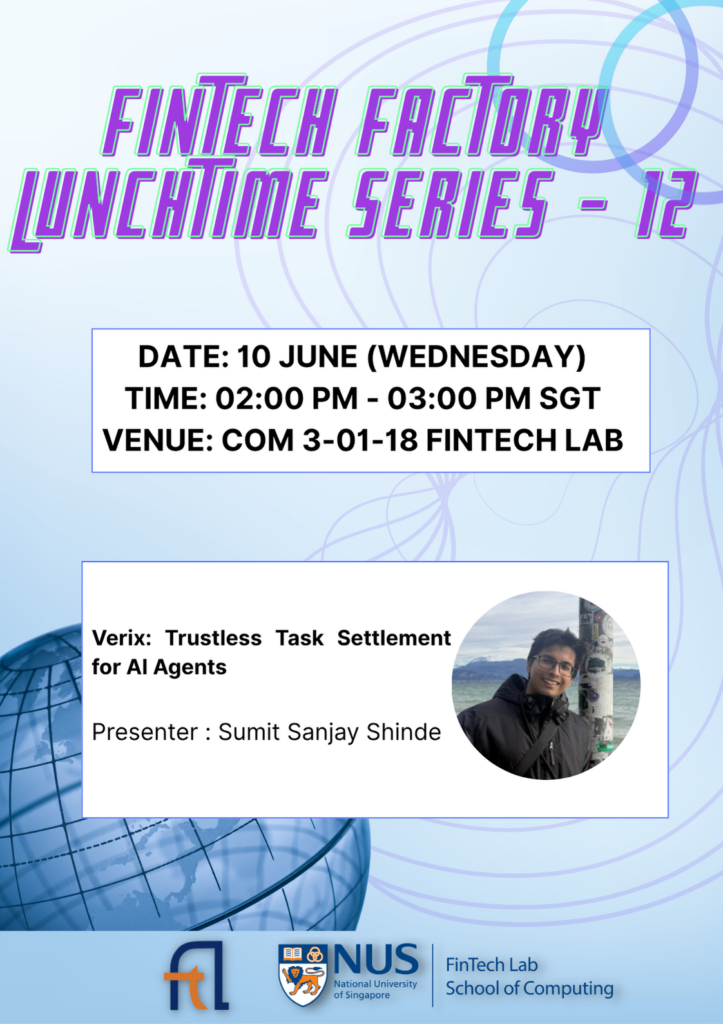
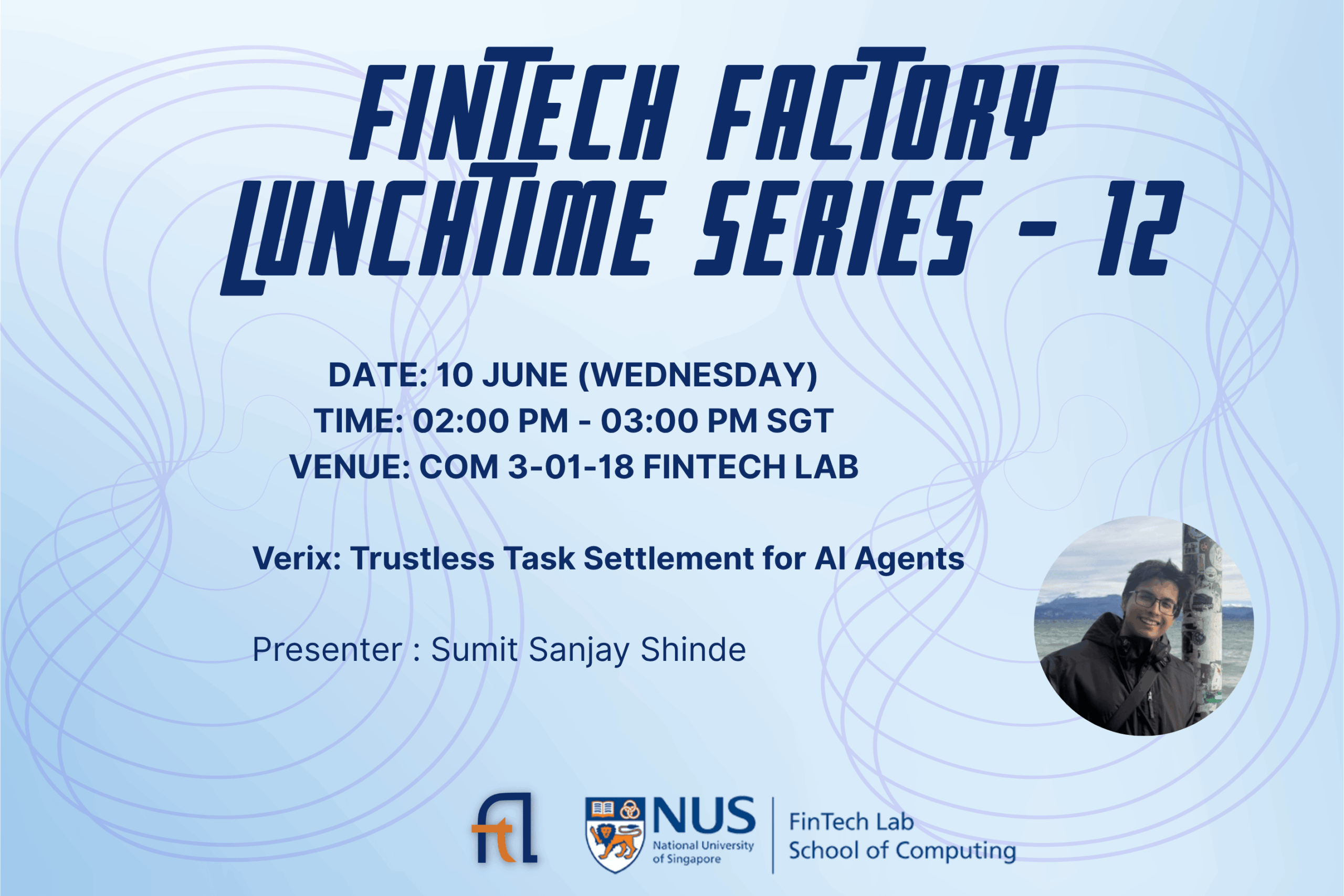
Verix: Trustless Task Settlement for AI Agents

About The Talk

The presentation introduces Verix, a trustless task settlement framework designed to enable secure and autonomous transactions between AI agents. As AI-driven commerce grows, traditional financial systems face challenges in verifying agent performance, establishing trust, and supporting machine-to-machine payments. Verix addresses these limitations by combining blockchain-based escrow, decentralized identities, and cryptographic verification to enable reliable agent interactions without human intervention.
1. Problem & Opportunity:
AI agents are moving from simple conversations to executing tasks and transactions, but current financial systems are designed for humans and lack ways to verify agent work before payment.

2. Verix Solution:
Verix is an open-source middleware and SDK that enables secure agent-to-agent (A2A) transactions using blockchain-based verification, decentralized identities (DIDs), and escrow payments without human intervention.

3. Three-Layer Verification System:

Layer 1: JSON schema validation ensures correct data structure.
Layer 2: DID signatures verify agent identity and authenticity.
Layer 3: XRPL crypto-condition escrow enables automatic payment release only after successful verification.

4. Key Findings & Future Direction:
The project shows that cryptographic validation can reduce financial risk, enable fast low-cost machine transactions, and replace human arbitration. Future plans include zero-knowledge verification and a no-code marketplace for autonomous AI commerce.

About The Speaker

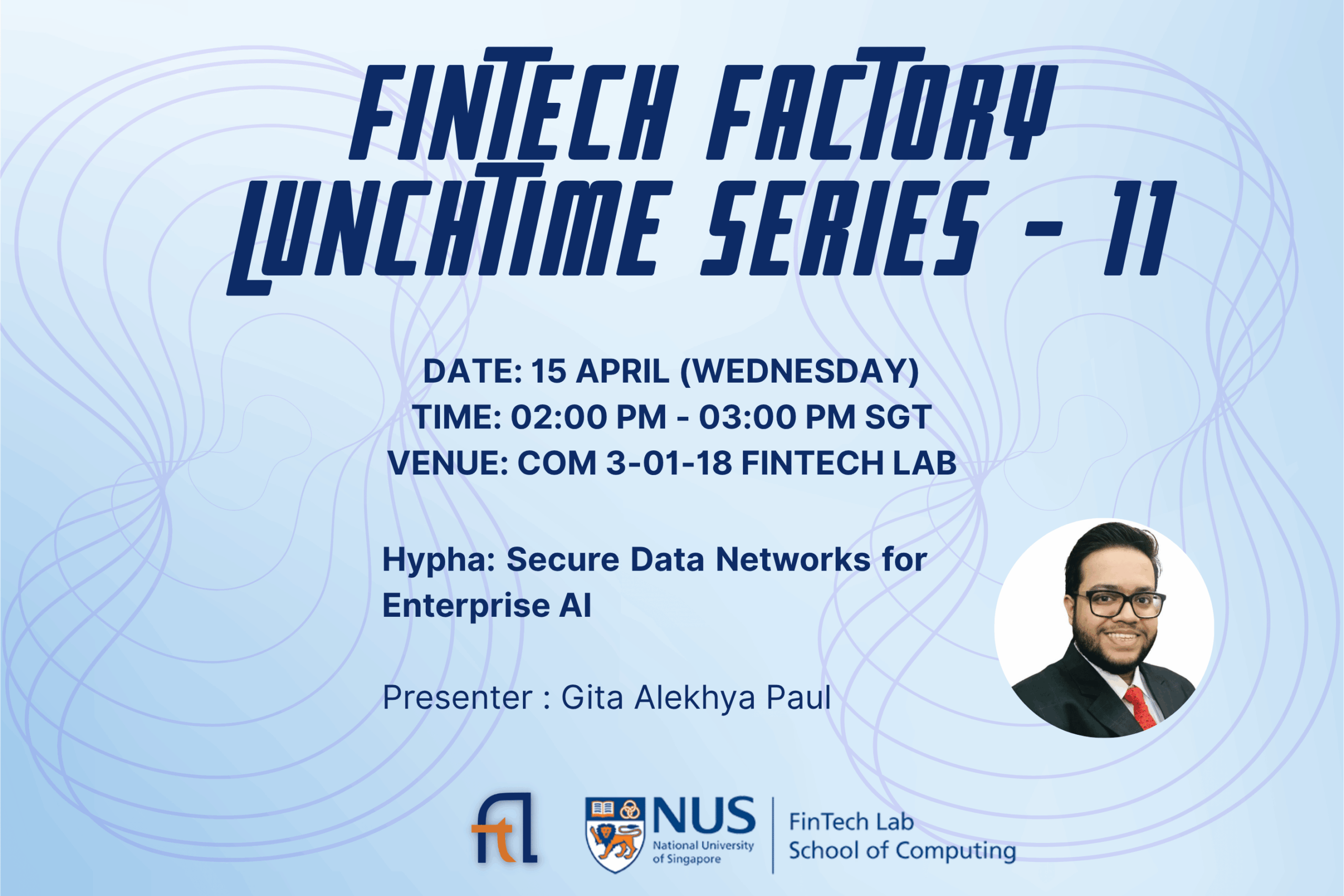
Sumit Sanjay Shinde

Sumit Sanjay Shinde is a technical builder and blockchain developer from the National University of Singapore (NUS) majoring in Information Systems. His core research and development focus lies at the intersection of decentralized machine to machine commerce, autonomous infrastructure optimization, and multi-chain payment rails, with a mission to transition the web from an Internet of Information to a trustless Internet of Intent.

ABOUT THE SERIES

The FinTech Factory Lunchtime Series brings together researchers and industry experts to discuss emerging developments in financial technology. Through guest talks and interactive discussions, the series explores topics such as decentralized systems, digital finance, blockchain infrastructure, and the evolving relationship between technology and financial markets.

MORE ON INSIGHTS HUB

FinTech Factory Lunchtime Series – 10

The Future of Decentralization: Coordination Mechanisms and Favorable Boundaries Wednesday, 1 April 2026 2PM – 3PM SGT Venue: NUS FinTech Lab, 11 Research Link, COM3-01-18 About The Talk How does

Read More

FinTech Factory LunchTime Series – 12 Read More »
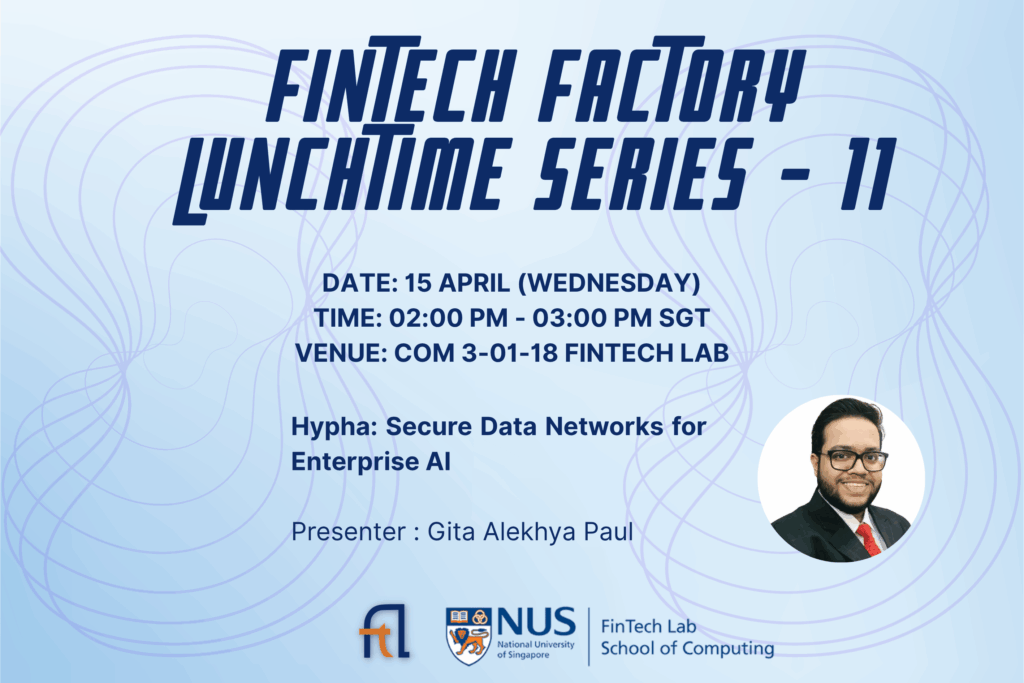
FinTech Factory LunchTime Series – 11

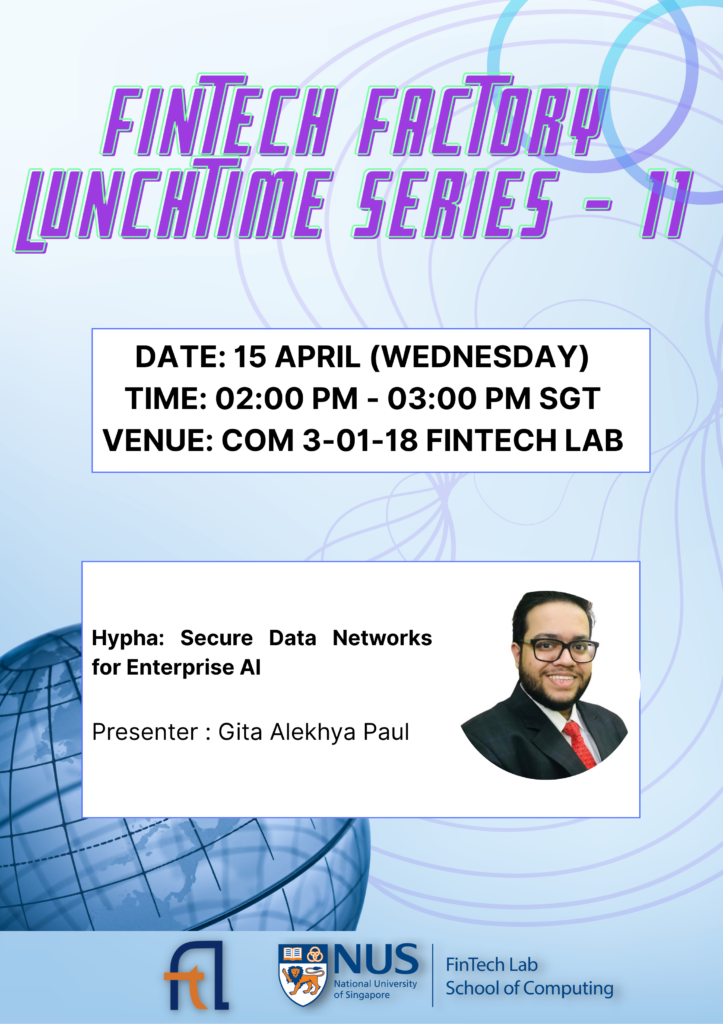
Hypha: Secure Data Networks for Enterprise AI

About The Talk

What would it take for AI agents to work with sensitive enterprise data without weakening trust, auditability, or policy control? Hypha is a proposed secure data network for enterprise AI that studies how autonomous agents may access distributed datasets under explicit delegation, auditable access controls, and policy-constrained execution. This talk presents the system design and research agenda behind Hypha, with a focus on two core problems: private metadata query interfaces that let agents evaluate dataset relevance without exposing raw data, and delegated access mechanisms that support time-bound, compliant data use in workflows such as private retrieval-augmented generation. The broader goal is to develop infrastructure for multi-agent systems that operate over regulated enterprise data with stronger guarantees of accountability and governance.

  1. Secure AI data infrastructure for enterprises:
    The project proposes building Secure Data Enclaves for Enterprise AI to allow financial institutions and enterprises to safely use AI agents while meeting strict data security and compliance requirements. It focuses on protecting sensitive data access, provenance, and usage in private RAG (Retrieval-Augmented Generation) systems.
  2. Privacy-preserving data sharing and AI workflows:
    The solution combines technologies such as Trusted Execution Environments (TEE), Multi-Party Computation (MPC), Zero-Knowledge Proofs (ZKP), and blockchain-based data networks to enable secure data storage, encrypted sharing, and private metadata queries without exposing actual datasets.
  3. Development of enterprise-ready AI security tools:
    The project aims to create MVPs including a private metadata query system and a secure data access pipeline that can integrate with AI agent frameworks. The long-term goal is to provide APIs or protocols enabling compliant AI collaboration across organisations with proper access control and audit trails.

About The Speaker

Gita Alekhya Paul

Gita Alekhya Paul is a researcher and engineer working on secure digital infrastructure for data-sensitive systems. His work spans blockchain infrastructure, distributed systems, smart accounts, multi-party computation, delegated access, and AI agent orchestration, with a steady focus on making complex systems usable under clear trust and control boundaries. Across research and industry, he has explored how autonomous software can interact with data, identity, and financial rails in ways that are auditable, policy-aware, and practical for real-world deployment.

ABOUT THE SERIES

The FinTech Factory Lunchtime Series brings together researchers and industry experts to discuss emerging developments in financial technology. Through guest talks and interactive discussions, the series explores topics such as decentralized systems, digital finance, blockchain infrastructure, and the evolving relationship between technology and financial markets.

MORE ON INSIGHTS HUB

FinTech Factory Lunchtime Series – 10

The Future of Decentralization: Coordination Mechanisms and Favorable Boundaries Wednesday, 1 April 2026 2PM – 3PM SGT Venue: NUS FinTech Lab, 11 Research Link, COM3-01-18 About The Talk How does

Read More

FinTech Factory LunchTime Series – 11 Read More »

FinTech Factory Lunchtime Series – 10

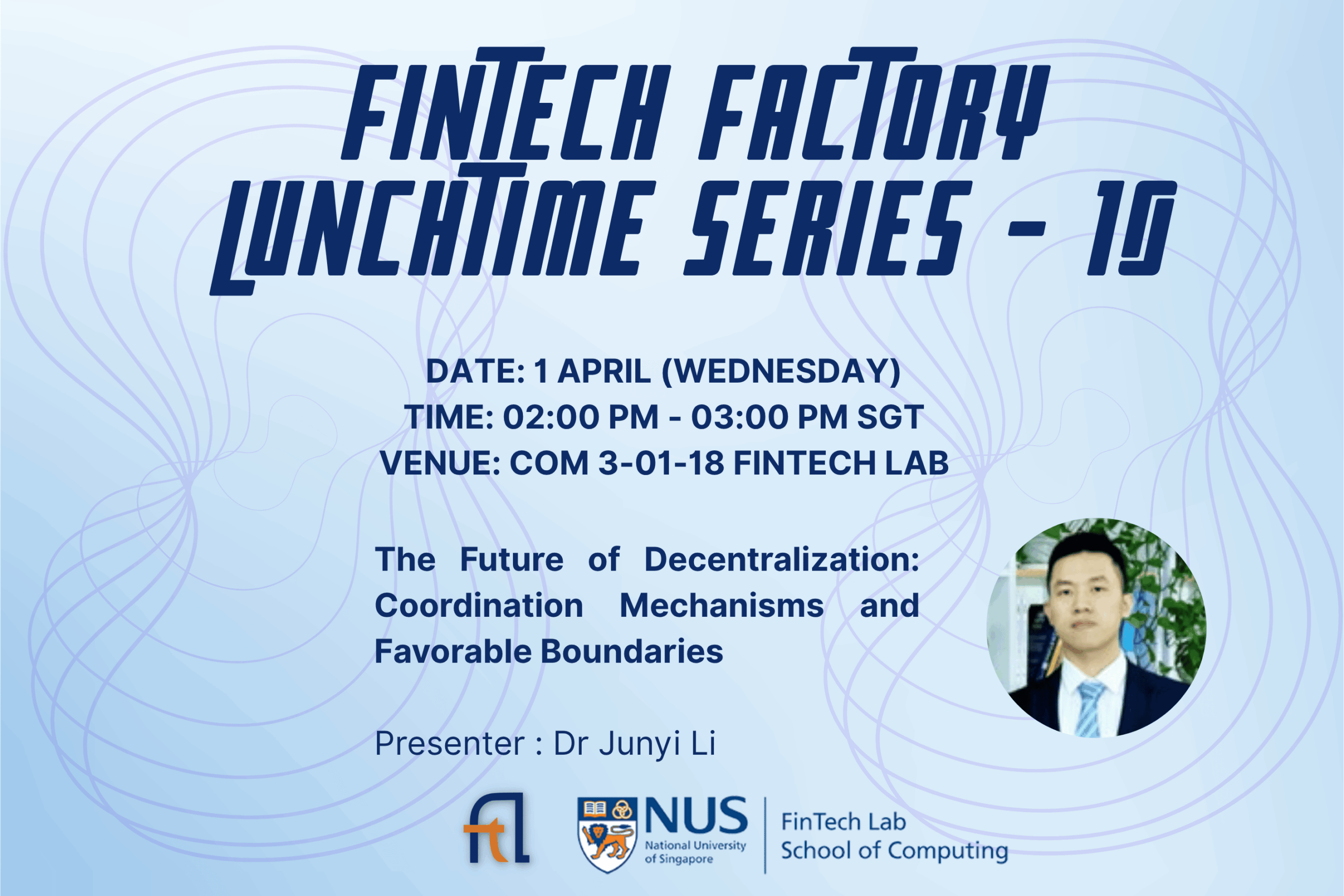
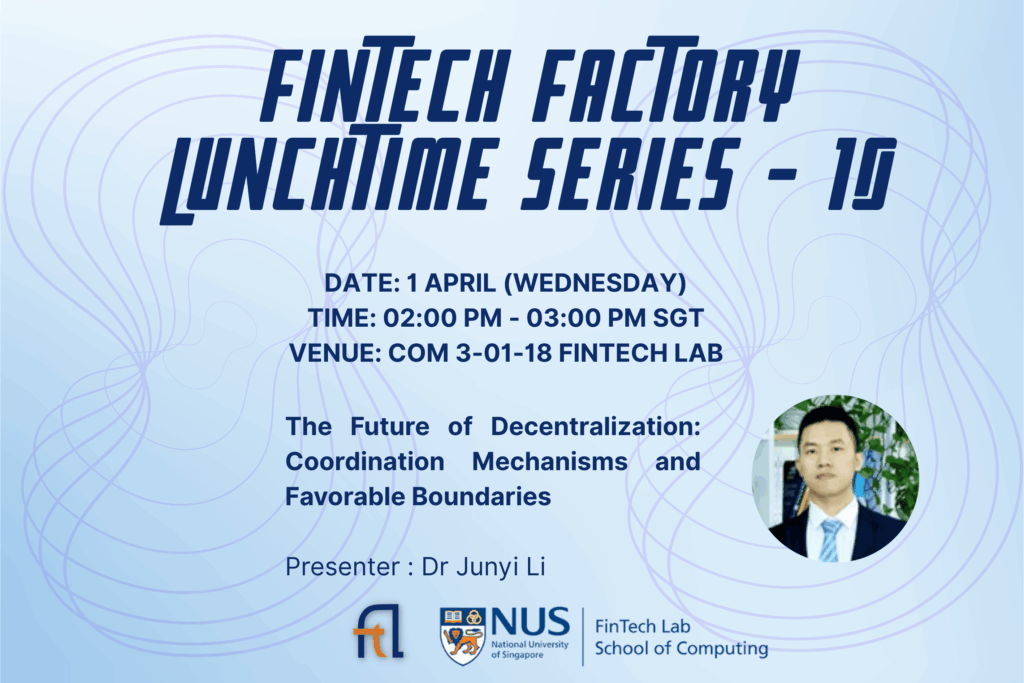
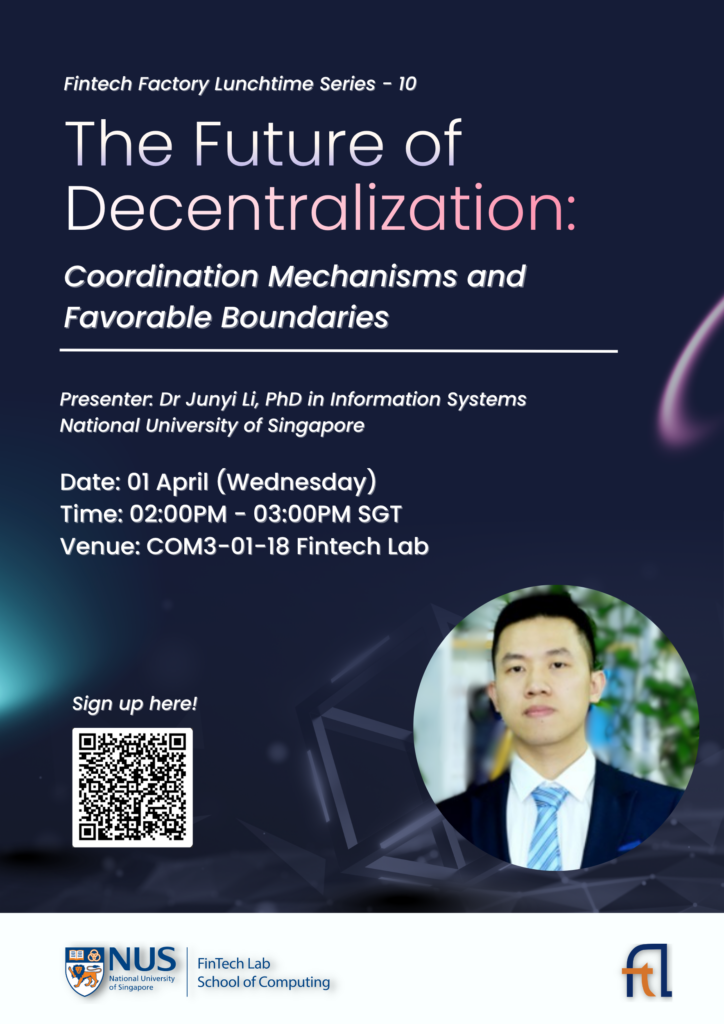
The Future of Decentralization: Coordination Mechanisms and Favorable Boundaries

About The Talk

How does collective intelligence emerge from distributed systems?

Decentralized organizing is becoming increasingly common with the rise of digital platforms, crowdsourcing systems, and blockchain governance. Yet an important challenge remains: how can collective intelligence emerge when decision-making and expertise are distributed across many individuals?

This talk examines two key aspects of decentralized systems — distributed decision rights and dispersed expertise — and presents research on how coordination mechanisms shape outcomes in DAO governance and crowdsourcing environments.

Study 1: DAO Governance

  • DAOs rely on token-holder voting instead of managers.
  • Consensus mechanisms replace hierarchical decision-making.
  • Hierarchies perform best in stable environments.
  • DAO-like systems perform better when environments are highly turbulent.
  • Key DAO design factors: Voting thresholds. Token ownership concentration. Voter participation. Contributor incentives.

Study 2: Crowdsourcing Systems

  • Traditional firms use small expert teams.
  • Crowdsourcing uses large, diverse participants solving problems independently.
  • Innovation depends not just on crowd size, but on coordinating bounded knowledge.
  • Specialists have deep but narrow expertise.
  • Generalists have broad but shallow expertise.
  • Best outcomes come from balancing independent search and collaborative
    interaction

Key Takeaways:

  • Consensus among autonomous actors can improve adaptation.
  • Re-interpretation among diverse solvers can drive breakthroughs.
  • Decentralized systems need thoughtful structural design, not just more participants or full autonomy.

About The Speaker

Dr Junyi Li – PhD · Information Systems · NUS

Dr Junyi Li researches decentralized systems and digital governance, focusing on how coordination mechanisms shape collaboration and incentives in blockchain ecosystems. His work examines how decentralized organizations manage decision-making and developer productivity in distributed environments.

ABOUT THE SERIES

The FinTech Factory Lunchtime Series brings together researchers and industry experts to discuss emerging developments in financial technology. Through guest talks and interactive discussions, the series explores topics such as decentralized systems, digital finance, blockchain infrastructure, and the evolving relationship between technology and financial markets.

MORE ON INSIGHTS HUB

FinTech Factory Lunchtime Series – 10

The Future of Decentralization: Coordination Mechanisms and Favorable Boundaries Wednesday, 1 April 2026 2PM – 3PM SGT Venue: NUS FinTech Lab, 11 Research Link, COM3-01-18 About The Talk How does

Read More

FinTech Factory Lunchtime Series – 10 Read More »

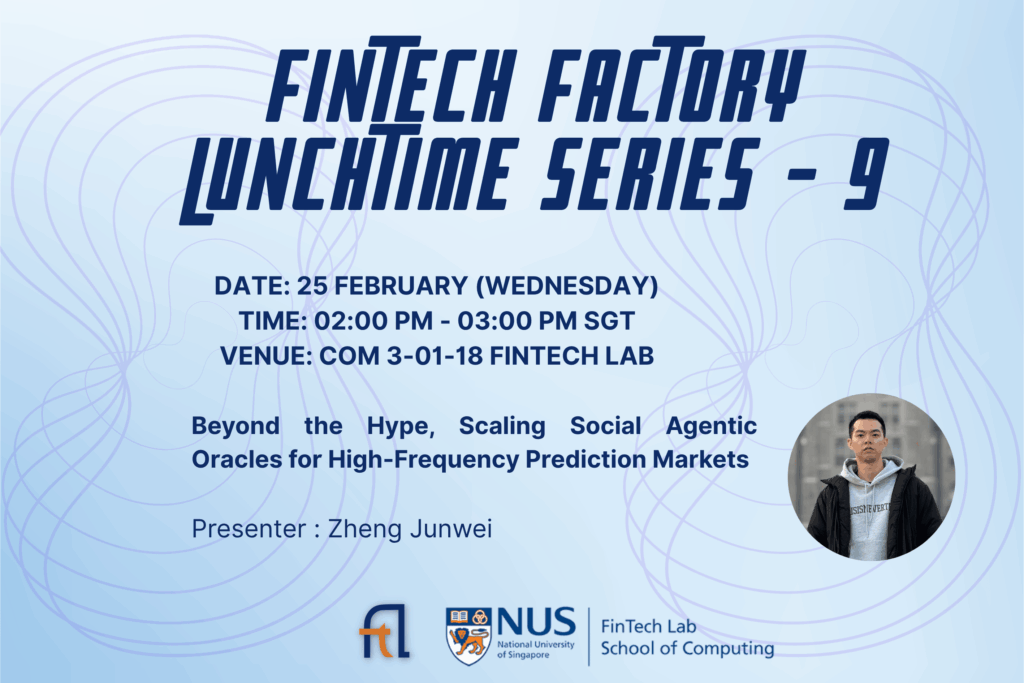
FinTech Factory LunchTime Series – 9

Overheat - The New SAO (Social Agentic Oracle)

About The Talk

Overheat is building a Social Agentic Oracle (SAO) on Solana to solve major challenges in prediction markets, particularly slow settlement times and inefficient capital usage. Current platforms such as prediction markets experience settlement delays ranging from a few hours to several days, leaving user funds locked and reducing liquidity. This creates a major problem where traders cannot quickly reuse capital for new opportunities, limiting market efficiency.

The project addresses these issues by combining AI agents, real-world data sources, and social consensus mechanisms to provide faster and more reliable market resolutions. Unlike traditional oracle models that rely on token-weighted disputes and can be influenced by large holders, Overheat aims to deliver non-binary, explainable, and community-verified outcomes with lower dispute risks. The system focuses on achieving low-latency settlement while maintaining transparency and decentralization.

Overheat has demonstrated early validation through active clients, ecosystem partnerships, and discussions with major prediction market platforms. Its current results show high accuracy and fast resolution capabilities, with a business model based on charging a processing fee for settled market volume while operating as a data service provider. The long-term vision is to become a critical infrastructure layer that improves scalability, trust, and efficiency across prediction markets.

About The Speaker

Zheng Junwei, Founder & CEO of Overheat

ABOUT THE SERIES

The FinTech Factory Lunchtime Series brings together researchers and industry experts to discuss emerging developments in financial technology. Through guest talks and interactive discussions, the series explores topics such as decentralized systems, digital finance, blockchain infrastructure, and the evolving relationship between technology and financial markets.

MORE ON INSIGHTS HUB

FinTech Factory Lunchtime Series – 10

The Future of Decentralization: Coordination Mechanisms and Favorable Boundaries Wednesday, 1 April 2026 2PM – 3PM SGT Venue: NUS FinTech Lab, 11 Research Link, COM3-01-18 About The Talk How does

Read More

FinTech Factory LunchTime Series – 9 Read More »

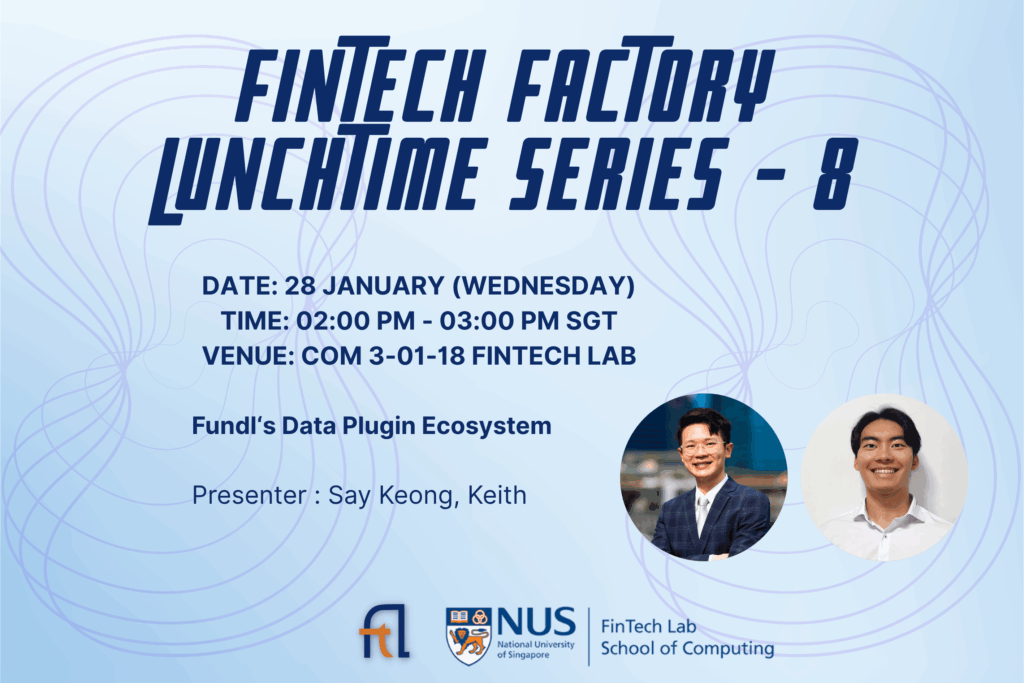
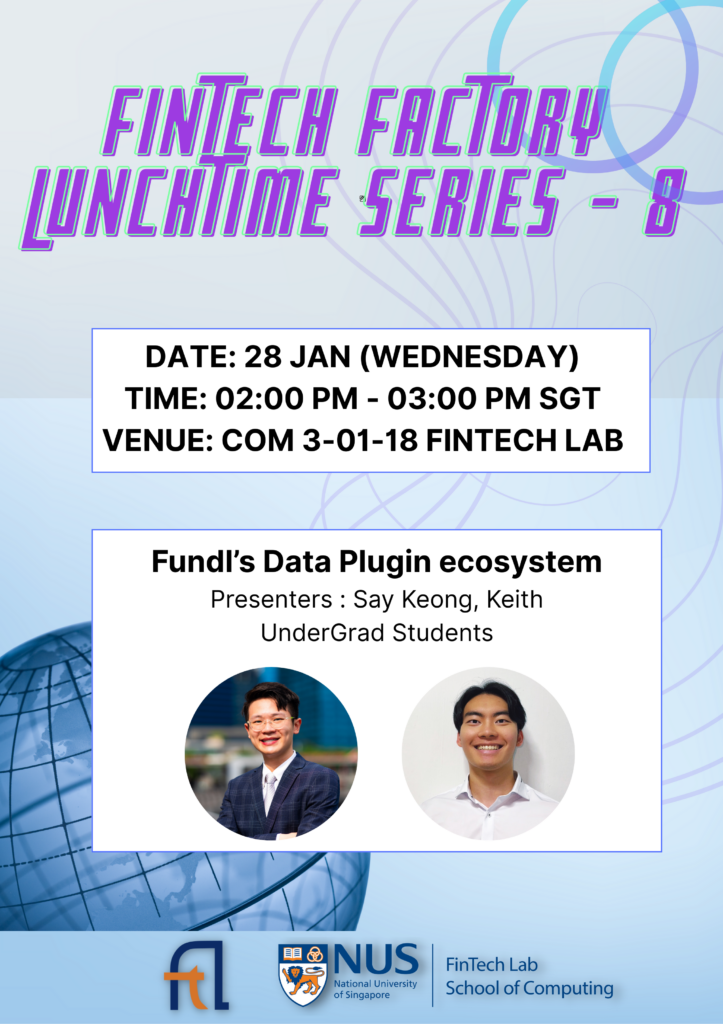
FinTech Factory LunchTime Series – 8

Fundl’s Data Plugin ecosystem

About The Talk

This session introduces Fundl’s Data Plugin ecosystem, a new approach to decentralized fundraising that transforms static crowdfunding pages into real-time, verifiable growth dashboards. We will explore how Fundl aggregates live signals from sources such as GitHub, Stripe, Google Analytics, social platforms, and market benchmarks to surface trustworthy indicators of momentum and execution. The discussion will cover the challenges of reducing information asymmetry in early-stage investing, the design of high-trust data plugins layered on top of decentralized fundraising and the strategic rationale behind a data-first model. Participants will gain an inside look at how Fundl enables backers to identify high-potential projects earlier, perform deeper due diligence, and participate in crowdfunding with venture-grade insight at mass-market scale.

Market Opportunity

Crowdfunding platforms represent a US$2.14 billion market (2024) dominated by incumbents like GoFundMe and Kickstarter. Fundl positions itself as a blockchain-powered alternative capable of disrupting the space by offering greater transparency, accessibility, and efficiency.

Key Features of Fundl

Decentralised fundraising

  • On-chain transparency showing how much funding is raised and how funds are used
  • Smart contracts enabling programmable accountability
  • Cross-border participation with reduced reliance on traditional banking systems
  • Open participation for both creators and backers

Benefits for project creators

  • Lower platform fees (2.5% vs ~5% on traditional platforms)
  • Open access without centralized gatekeeping
  • Streaming payments, where pledged funds are released over time through smart contracts

Benefits for funders

  • Transparent and trackable transactions on the blockchain
  • Refund mechanisms via majority voting
  • Early adopter benefits such as lifetime pricing or priority access
  • Real-time execution metrics (e.g., GitHub activity, revenue signals)
Credibility Through Verified Data

Fundl integrates external platforms such as Stripe, GitHub, and Google Analytics to create a system of record for project metrics. These integrations help:

  • Prevent inflated metrics
  • Provide objective benchmarks for comparing projects
  • Replace narrative fundraising with verifiable evidence of traction
  • Reduce perceived risk for backers
Strategic Feedback from Discussion

Participants suggested potential enhancements:

  • Introduce fixed donation tiers and flexible contribution models
  • Enable non-monetary contributions (e.g., coding, marketing) with rewards such as revenue share or project equity
  • Explore an always-on fundraising model structured in seasons or batches to maintain engagement
Fundl Next Steps:
  1. Complete remaining integrations and prepare for mainnet deployment
  2. Conduct targeted outreach to creators already active online or building publicly
  3. Leverage startup ecosystems such as Product Hunt, accelerators, and university entrepreneurship programs

About The Speaker

POH SAY KEONG – CEO

KEITH – COO

Say Keong is an experienced software developer with prior internship experience at large financial institutions and blockchain startups. He brings strong technical execution, product-building capability, and exposure to both traditional finance and Web3 environments.

Keith is a crypto investments and research analyst with deep exposure to the crypto industry. He has experience working with leading crypto venture capital funds and brings strong market insight, investment analysis, and ecosystem knowledge.

ABOUT THE SERIES

The FinTech Factory Lunchtime Series brings together researchers and industry experts to discuss emerging developments in financial technology. Through guest talks and interactive discussions, the series explores topics such as decentralized systems, digital finance, blockchain infrastructure, and the evolving relationship between technology and financial markets.

MORE ON INSIGHTS HUB

FinTech Factory Lunchtime Series – 10

The Future of Decentralization: Coordination Mechanisms and Favorable Boundaries Wednesday, 1 April 2026 2PM – 3PM SGT Venue: NUS FinTech Lab, 11 Research Link, COM3-01-18 About The Talk How does

Read More

FinTech Factory LunchTime Series – 8 Read More »

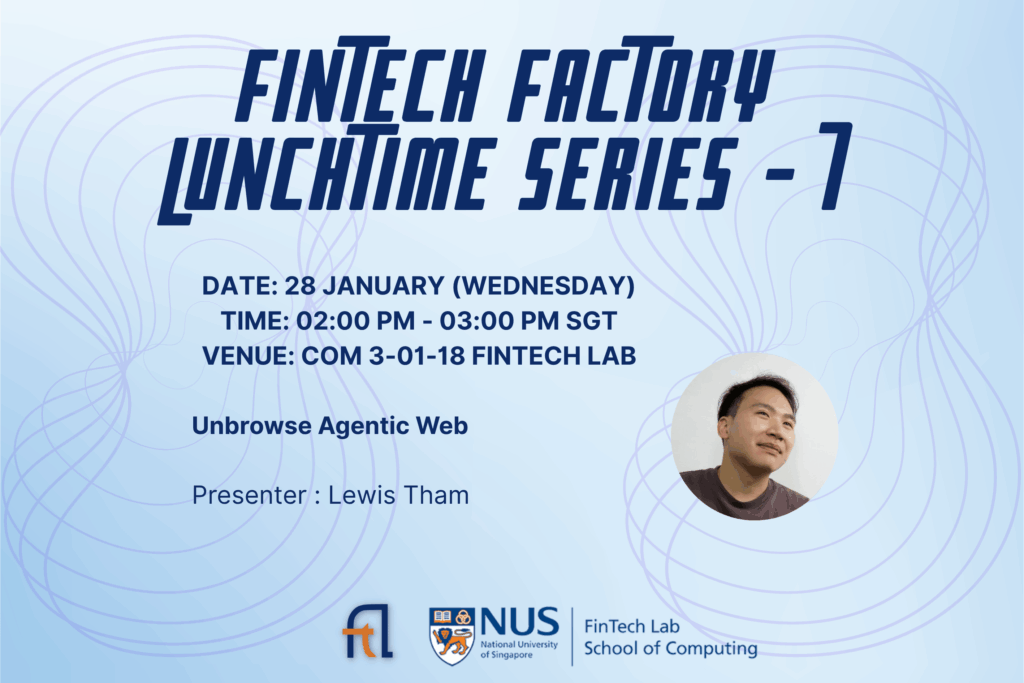
FinTech Factory LunchTime Series – 7

Unbrowse agentic Web

About The Talk

Unbrowse Agentic Web is a research project focused on enabling AI agents to interact with the internet more effectively by overcoming current limitations in web access. Before modern agent frameworks, large language models had limited ability to access online information unless websites provided APIs or custom MCP (Model Context Protocol) integrations. Unbrowse aims to bridge this gap by allowing agents to understand and interact with normal web workflows like human users.

The project experimented with a Chrome extension, MCP integration, and an agent playground to capture browser network activity and transform website interactions into reusable agent tools. The research explored whether web applications could be automatically converted into agent-compatible interfaces through reverse engineering of browser-server communication, rather than relying on manually built APIs or MCPs.

The findings suggest that a significant portion of websites can potentially become accessible to AI agents through agentic indexing, enabling faster and more flexible automation compared to traditional GUI-based browser agents. Future development focuses on turning the technical prototype into a scalable product, addressing challenges such as reliability, commercialization, and creating incentives for broader web indexing.

About The Speaker

Lewis Tham 

Lewis Tham is the founder of Unbrowse, infrastructure for the agentic web. Unbrowse runs a shared route and access graph that lets AI agents transact with the web at machine scale, with over two million agent requests routed across more than 35,000 verified routes to date. Before Unbrowse, Lewis worked as a creative engineer focused on unorthodox solutions to real problems, building tools that sit at the intersection of automation, payments, and developer experience. He writes and speaks about agent-native infrastructure, x402, and what changes when machines, not humans, are the primary users of the internet.

ABOUT THE SERIES

The FinTech Factory Lunchtime Series brings together researchers and industry experts to discuss emerging developments in financial technology. Through guest talks and interactive discussions, the series explores topics such as decentralized systems, digital finance, blockchain infrastructure, and the evolving relationship between technology and financial markets.

MORE ON INSIGHTS HUB

FinTech Factory Lunchtime Series – 10

The Future of Decentralization: Coordination Mechanisms and Favorable Boundaries Wednesday, 1 April 2026 2PM – 3PM SGT Venue: NUS FinTech Lab, 11 Research Link, COM3-01-18 About The Talk How does

Read More

FinTech Factory LunchTime Series – 7 Read More »

FinTech Factory LunchTime Series – 6

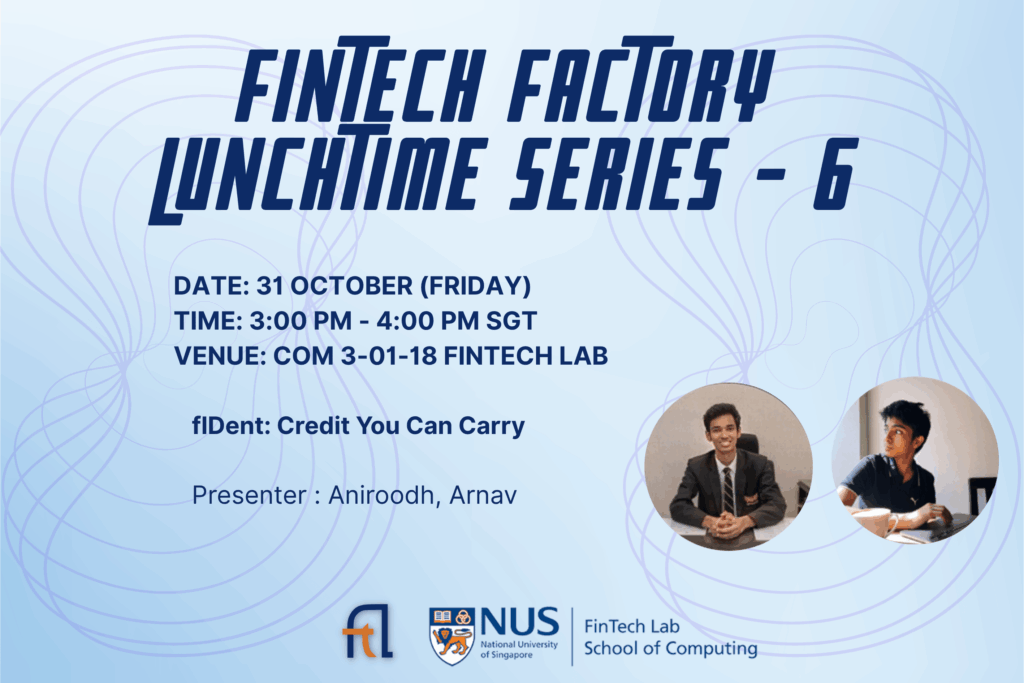
flDent: Credit You can Carry

About The Talk

fIDent is a fintech solution designed to solve the problem of financial exclusion among gig workers and informal workers who lack traditional credit histories. Although millions of these workers have income streams, bank accounts, and digital payment activity, many remain invisible to formal financial systems because lenders struggle to assess their creditworthiness. fIDent aims to transform this overlooked population into credible borrowers by creating a portable, decentralized financial identity

The platform creates a real-time financial passport by combining digital transaction data, financial behavior, and on-chain credentials. Through technologies such as decentralized identity, AI-powered scoring, and explainable analysis, fIDent evaluates not only income but also spending patterns, savings behavior, and work consistency. This allows users to build financial reputation while giving lenders transparent insights for better underwriting decisions.

fIDent provides value to both users and financial institutions by enabling access to credit, insurance, housing opportunities, and other financial products while helping lenders reduce risk and reach underserved markets. The business model focuses on B2B APIs, partnerships with financial institutions, and financial product distribution, with the long-term vision of becoming a global financial identity infrastructure for underbanked populations.

About The Speaker

Aniroodh, Arnav

Aniroodh has built med-tech ventures, and comes with internship experience across startups, private equity, and VC-backed firms. He brings sharp strategy and execution skills in scaling operations and driving growth.

Arnav is a product-driven builderwho led the tech for a DeFi startupaggregating financial protocols.He thrives on turning ideas intoreal-world solutions with lean,fast-moving teams.


ABOUT THE SERIES

The FinTech Factory Lunchtime Series brings together researchers and industry experts to discuss emerging developments in financial technology. Through guest talks and interactive discussions, the series explores topics such as decentralized systems, digital finance, blockchain infrastructure, and the evolving relationship between technology and financial markets.

MORE ON INSIGHTS HUB

FinTech Factory Lunchtime Series – 10

The Future of Decentralization: Coordination Mechanisms and Favorable Boundaries Wednesday, 1 April 2026 2PM – 3PM SGT Venue: NUS FinTech Lab, 11 Research Link, COM3-01-18 About The Talk How does

Read More

FinTech Factory LunchTime Series – 6 Read More »

FinTech Factory LunchTime Series – 5

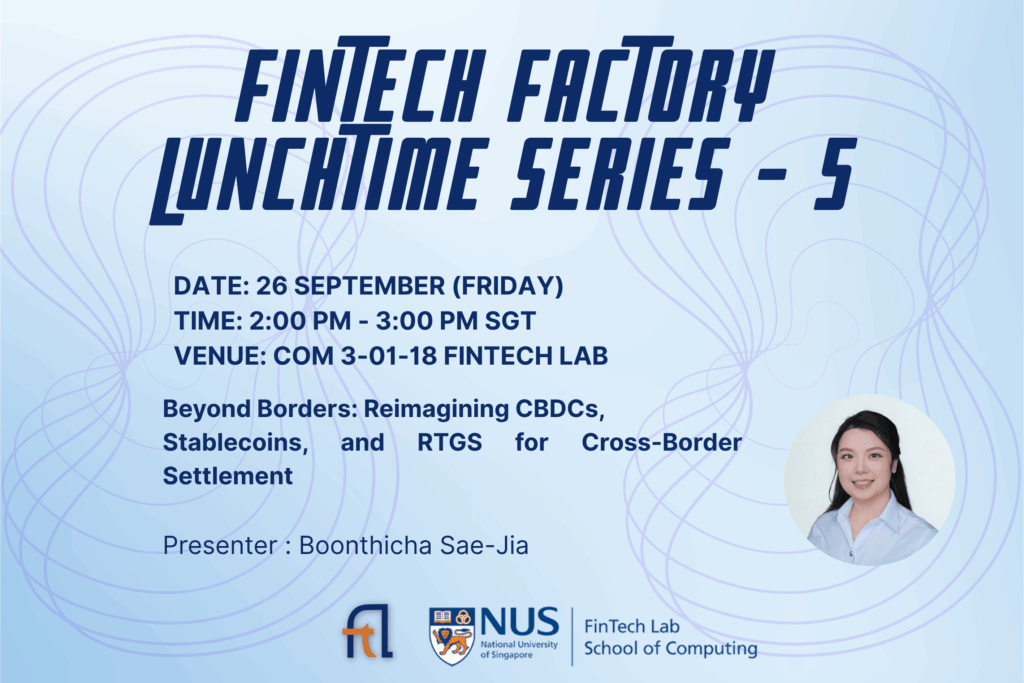
Beyond Borders: Reimagining CBDCs, Stablecoins and RTGS for Cross-border settlement

About The Talk

The current cross-border payment system faces significant inefficiencies due to its dependence on traditional correspondent banking networks. Transactions often require multiple intermediaries, resulting in slow settlement times of several days, higher costs, and additional complexity from reliance on major currency clearing systems such as the US dollar and euro. These limitations create challenges for businesses that require faster, cheaper, and more scalable international payment solutions.

To improve global payment infrastructure, international efforts such as the G20 roadmap focus on enhancing payment speed, transparency, accessibility, and interoperability. Key improvements include expanding access to real-time gross settlement (RTGS) systems and adopting the ISO 20022 messaging standard to improve communication between financial institutions. However, achieving fully real-time, 24/7 cross-border payments remains difficult due to existing legacy systems and operational limitations.

Emerging technologies such as blockchain, stablecoins, and central bank digital currencies (CBDCs) provide potential solutions but also introduce new challenges. Stablecoins enable faster and cheaper transactions but raise concerns around regulation, transparency, and compliance, while CBDCs offer greater oversight but may face integration and efficiency issues when connected with existing financial infrastructure. Therefore, the future of cross-border payments requires a balanced approach that combines technological innovation, infrastructure modernization, interoperability, and regulatory compliance.

About The Speaker

Boonthicha Sae-Jia

Boonthicha holds a Bachelor’s degree in Robotics and Artificial Intelligence from Chulalongkorn University.Research Focus: Specializes in Machine Learning, Natural Language Processing (NLP), and Large Language Models (LLMs) applied to financial technologies and time-series data.Past Experience: Gained experience through international exchanges in Hong Kong and Japan, as well as a Data Engineering internship. 

ABOUT THE SERIES

The FinTech Factory Lunchtime Series brings together researchers and industry experts to discuss emerging developments in financial technology. Through guest talks and interactive discussions, the series explores topics such as decentralized systems, digital finance, blockchain infrastructure, and the evolving relationship between technology and financial markets.

MORE ON INSIGHTS HUB

FinTech Factory Lunchtime Series – 10

The Future of Decentralization: Coordination Mechanisms and Favorable Boundaries Wednesday, 1 April 2026 2PM – 3PM SGT Venue: NUS FinTech Lab, 11 Research Link, COM3-01-18 About The Talk How does

Read More

FinTech Factory LunchTime Series – 5 Read More »

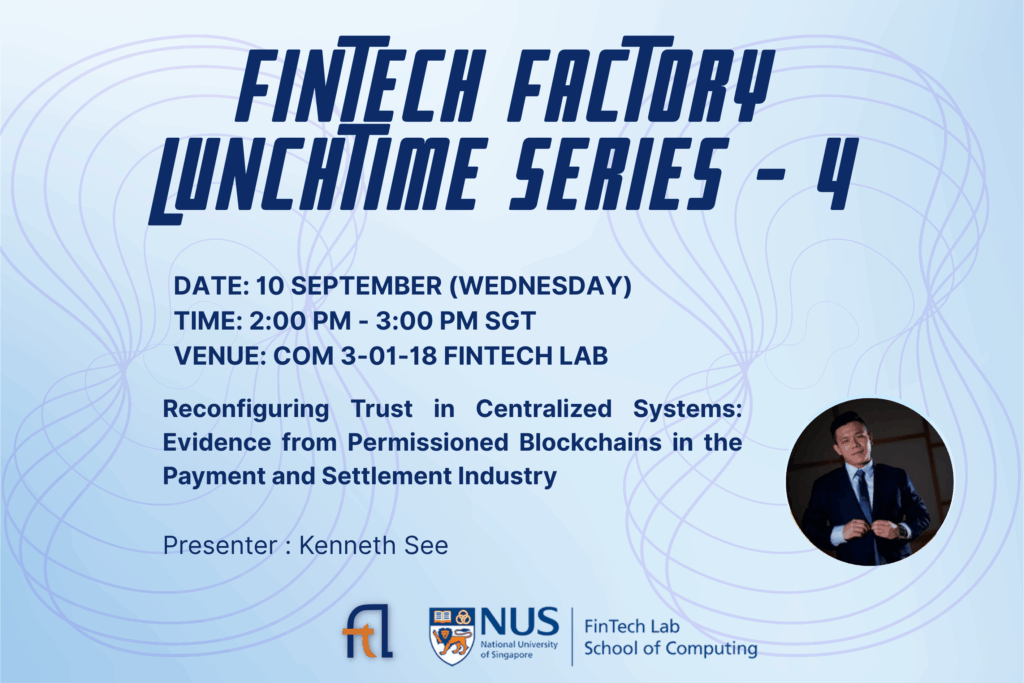
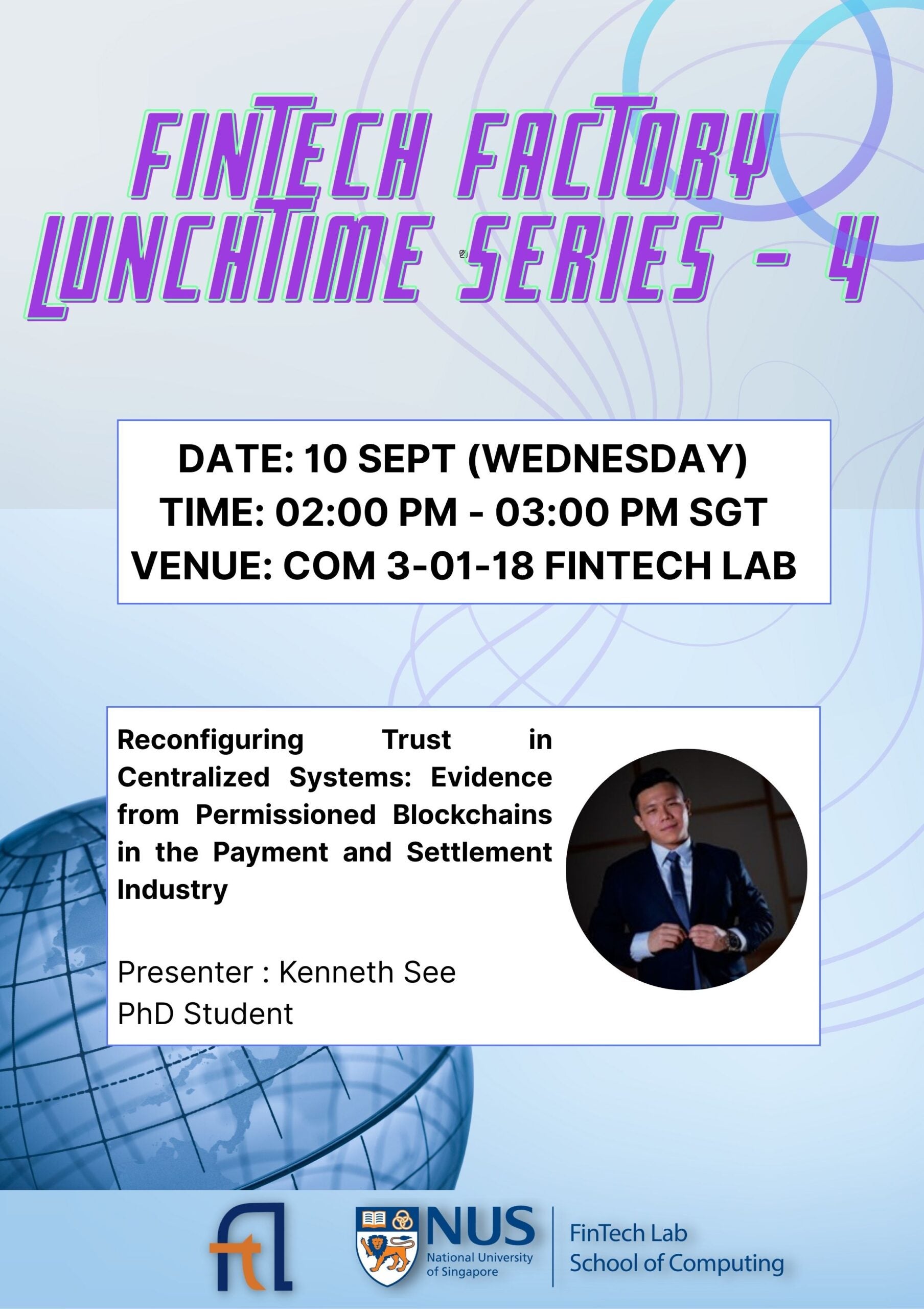
FinTech Factory LunchTime Series – 4

Reconfiguring Trust in Centralized Systems: Evidence from Permissioned Blockchains in the Payment and Settlement Industry

About The Talk

The seminar presentation “Reconfiguring Trust in Centralized Systems: Evidence from Permissioned Blockchains in the Payment and Settlement Industry” by Kenneth See from the NUS FinTech Lab explores how blockchain technology changes the way trust is established within traditional financial systems. Although blockchain is often described as a “trustless” technology, the study highlights a paradox: permissioned blockchains used in regulated industries still depend on trusted institutions, governance structures, and collaboration among participants. The research examines how trust evolves rather than disappears when blockchain is introduced into payment and settlement systems.

The study uses a case study approach covering the period from 2016 to 2025, focusing on two areas: interbank settlement and securities trading and management. Before blockchain adoption, these industries relied heavily on intermediaries, fragmented systems, and institutional coordination. With blockchain adoption, financial institutions began experimenting with permissioned networks, tokenization of assets, cross-border settlement, and new forms of collaboration. The findings show that blockchain adoption requires alignment between technology, regulations, existing infrastructure, and industry stakeholders rather than simply replacing current systems.

The presentation concludes that blockchain should be understood as a socio-technical infrastructure where trust is reconfigured through governance, protocols, and shared standards. Successful adoption depends on mechanisms such as delegated trust through immutability, iterative alignment with existing processes, and risk management through cryptographic security and regulatory compliance. The research suggests that the future of blockchain in finance depends less on eliminating trust and more on creating new forms of collective trust among institutions, regulators, and technology providers.

About The Speaker

Kenneth See

He serves as the Assistant Director within the Financial Infrastructure & Artificial Intelligence Office at MAS.Focus Areas: His work heavily centers around Digital Assets and AI strategies.Background: He holds an FCCA qualification and pursued a PhD at the National University of Singapore (NUS) funded by the Asian Institute of Digital Finance, specializing in adaptive systems for dynamic financial policy decisions.

ABOUT THE SERIES

The FinTech Factory Lunchtime Series brings together researchers and industry experts to discuss emerging developments in financial technology. Through guest talks and interactive discussions, the series explores topics such as decentralized systems, digital finance, blockchain infrastructure, and the evolving relationship between technology and financial markets.

MORE ON INSIGHTS HUB

FinTech Factory Lunchtime Series – 10

The Future of Decentralization: Coordination Mechanisms and Favorable Boundaries Wednesday, 1 April 2026 2PM – 3PM SGT Venue: NUS FinTech Lab, 11 Research Link, COM3-01-18 About The Talk How does

Read More

FinTech Factory LunchTime Series – 4 Read More »

NUS FinTech Lab Interns Take XRPL Innovation Global

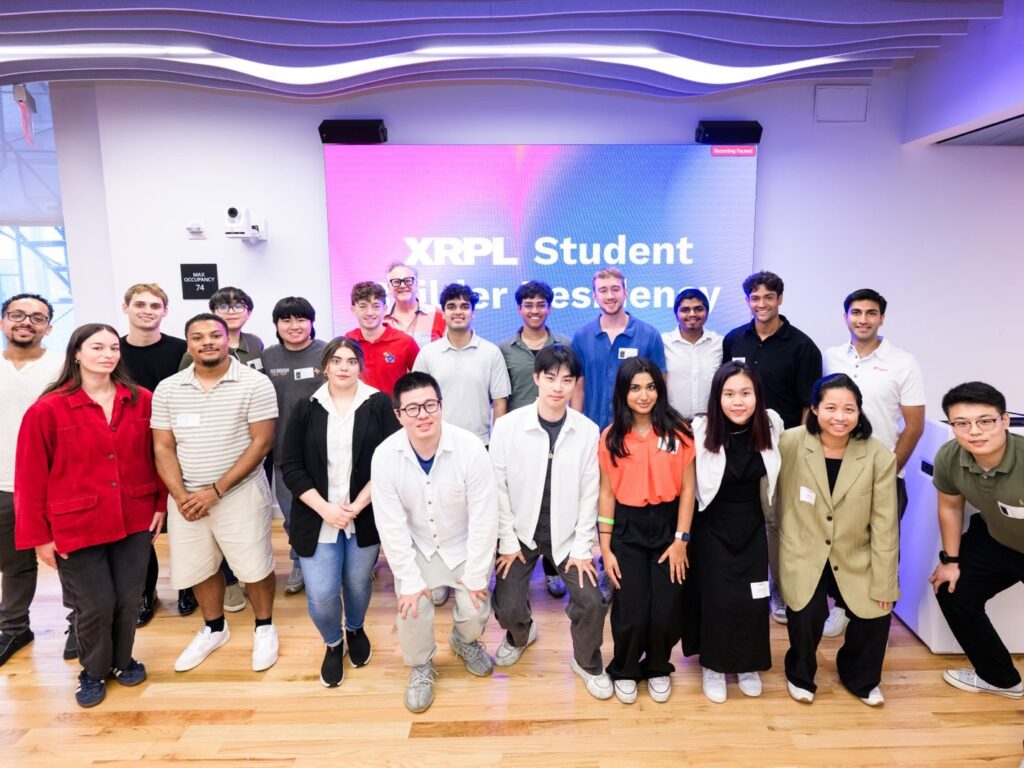
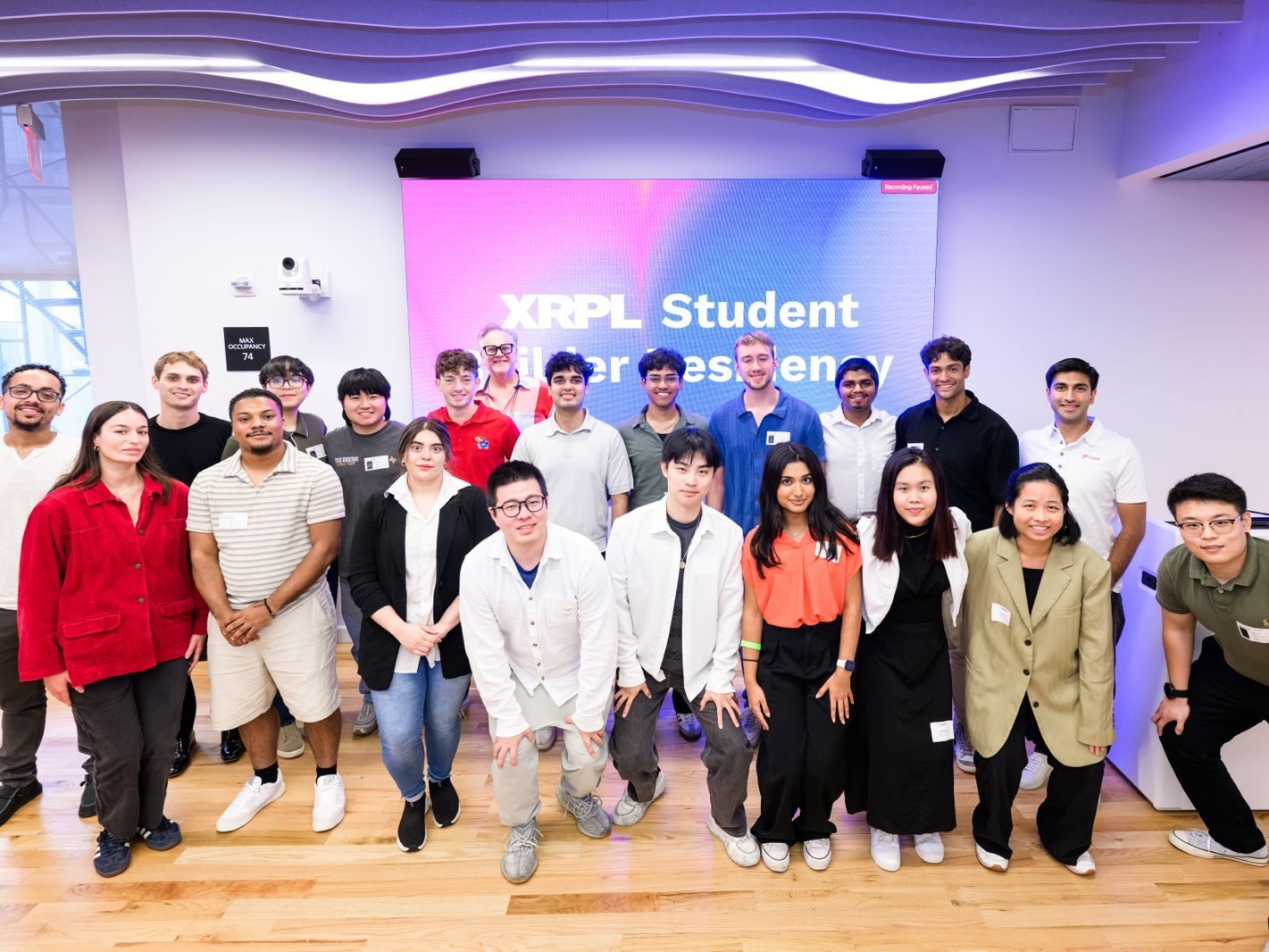
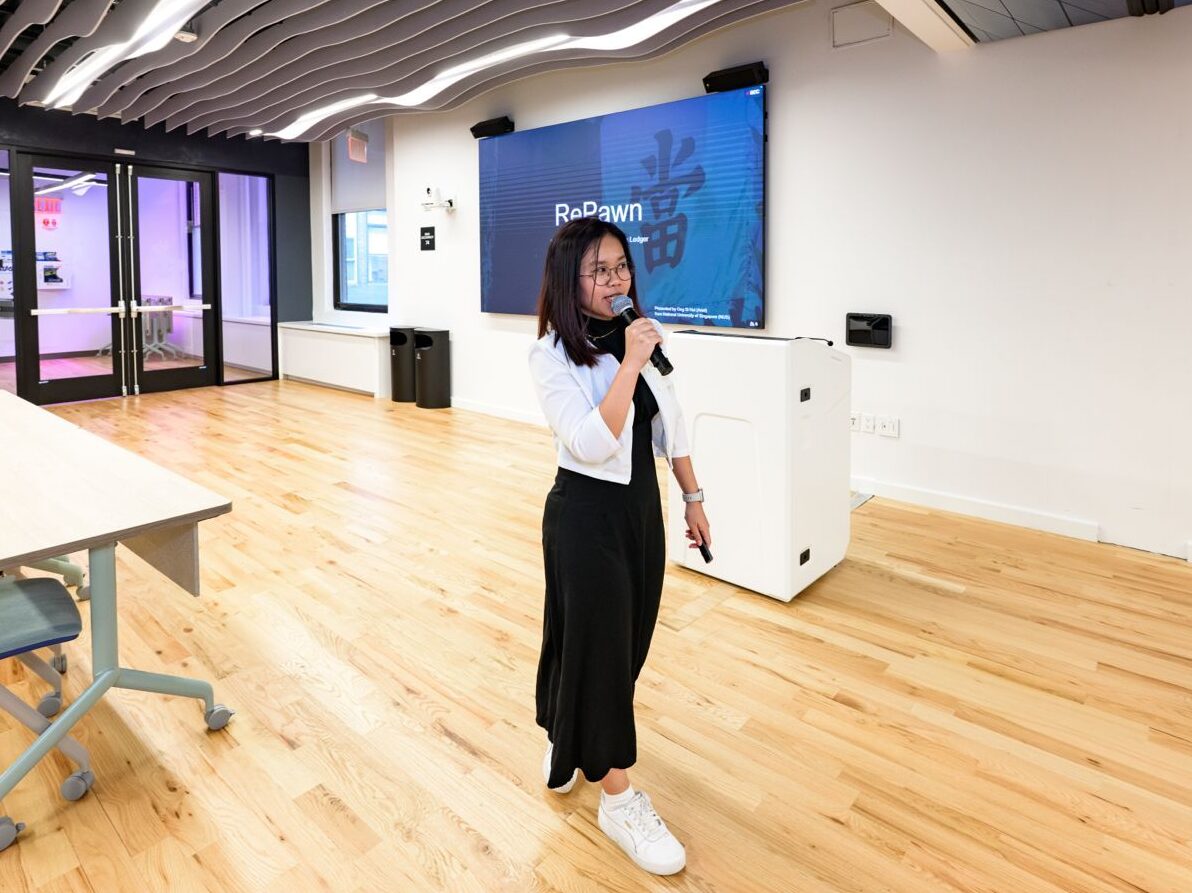
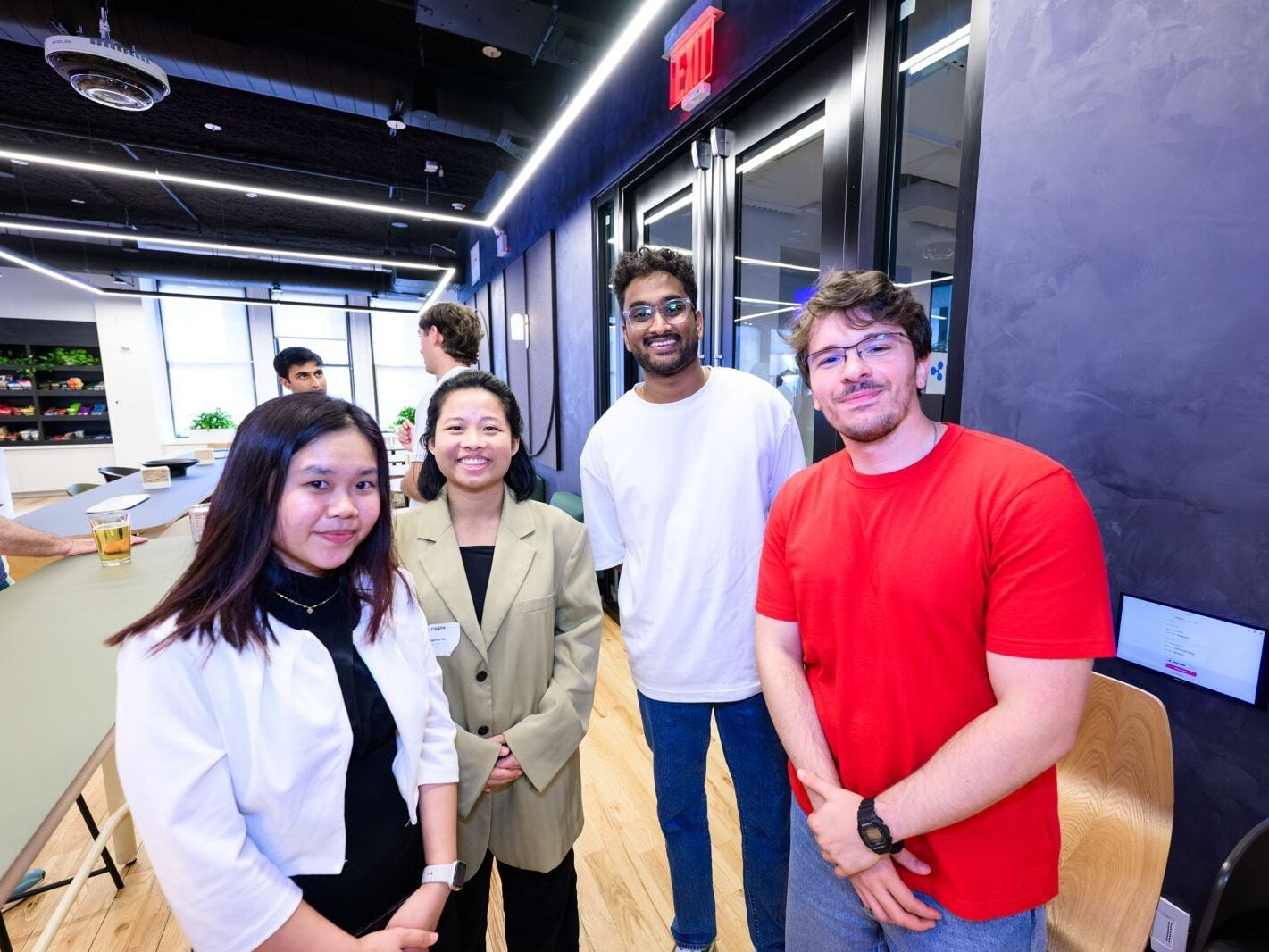
At NUS FinTech Lab, we empower students to explore, experiment, and innovate. Recently, our interns Ong Si Hui (Ariel) and Do Trong Uy (Wyn) represented the Lab at major XRPL programs in New York and Paris, gaining hands-on blockchain experience and global perspectives.

Ariel – XRPL Student Builder Residency 2.0, New York

Three days of travel from Singapore to New York between 13 Aug and 15 Aug, 2025 were just the beginning of Ariel’s journey at the XRPL Student Builder Residency 2.0.

Over four weeks, she transformed an idea into RePawn, the first gold-pawn shop on the XRP Ledger. The project allows gold to be pledged as collateral, automates compliance with XRPL Hooks, and manages risk on-chain.

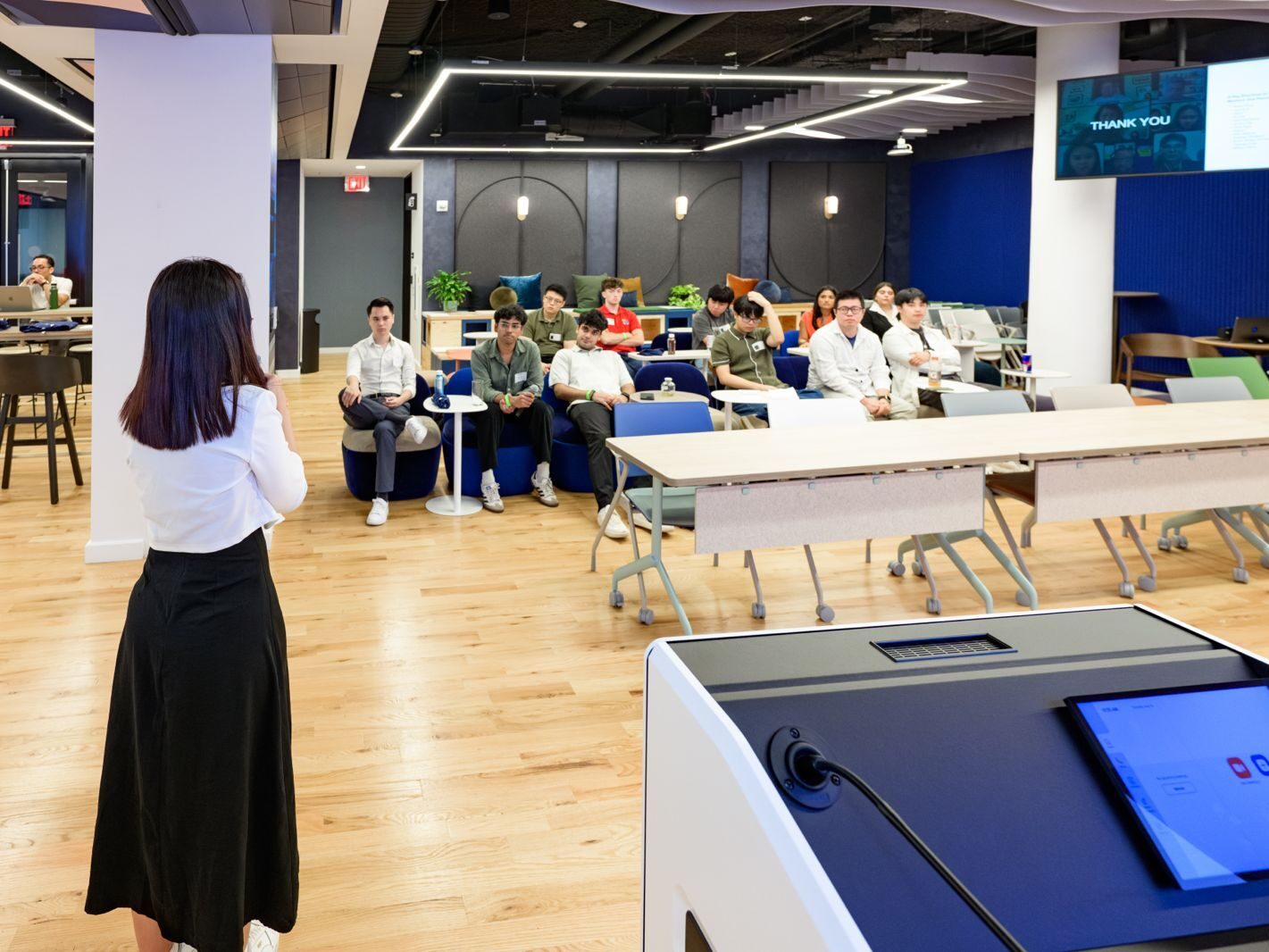
Her demo at Demo Day showcased the potential of blockchain to traditional finance and highlighted the collaborative innovation of student builders worldwide.

“The late-night debugging, constant feedback, and collaborative spirit made every challenge worth it.”

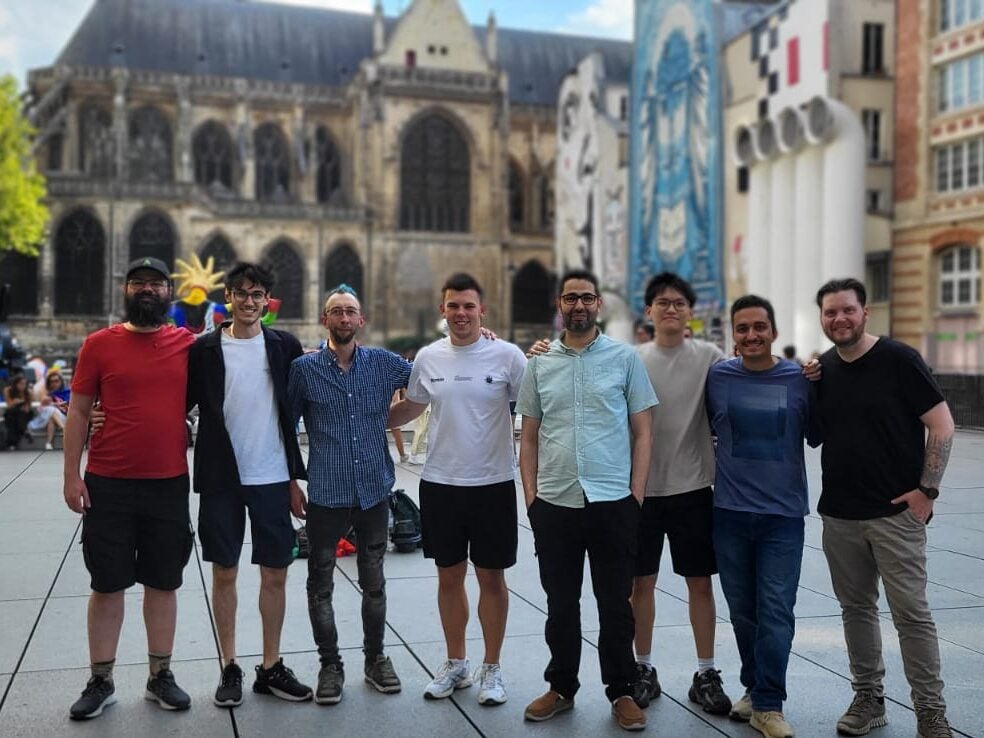
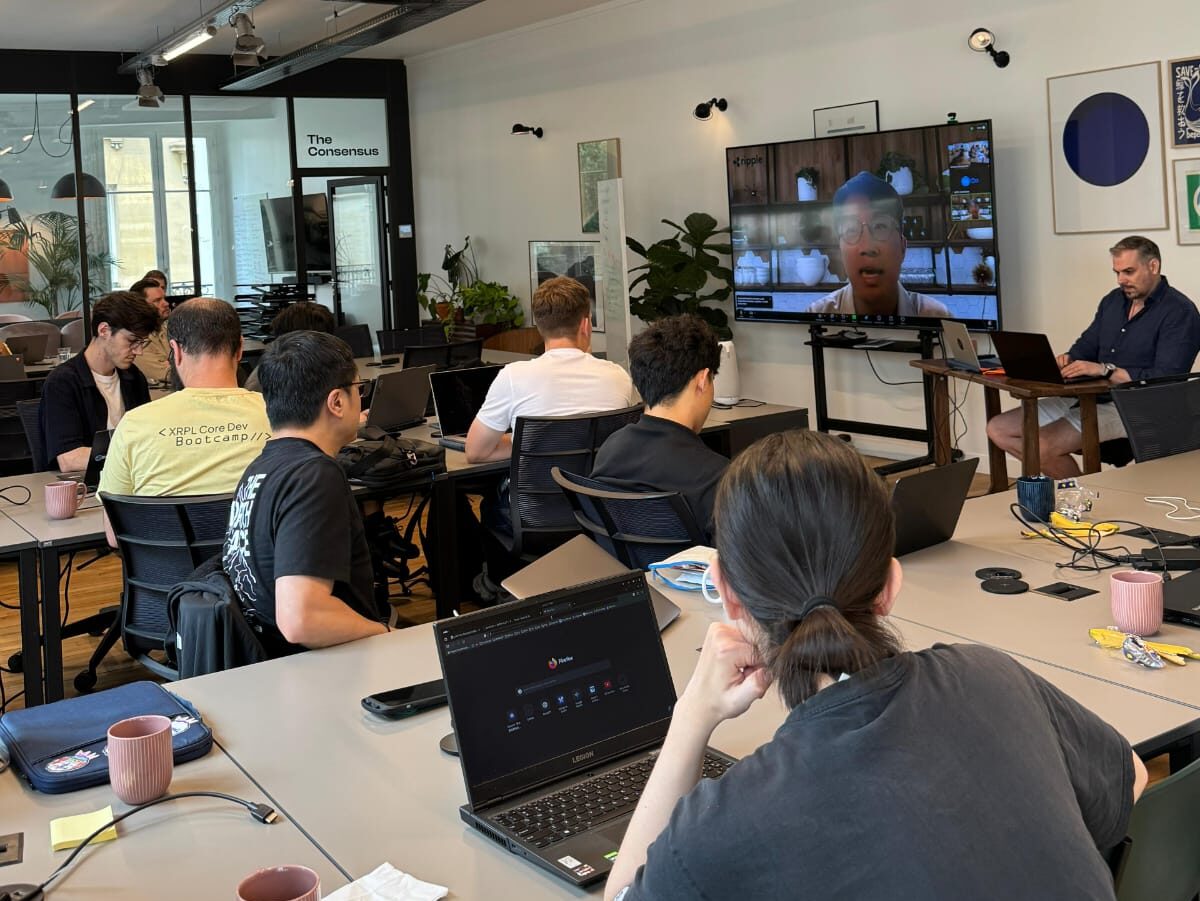
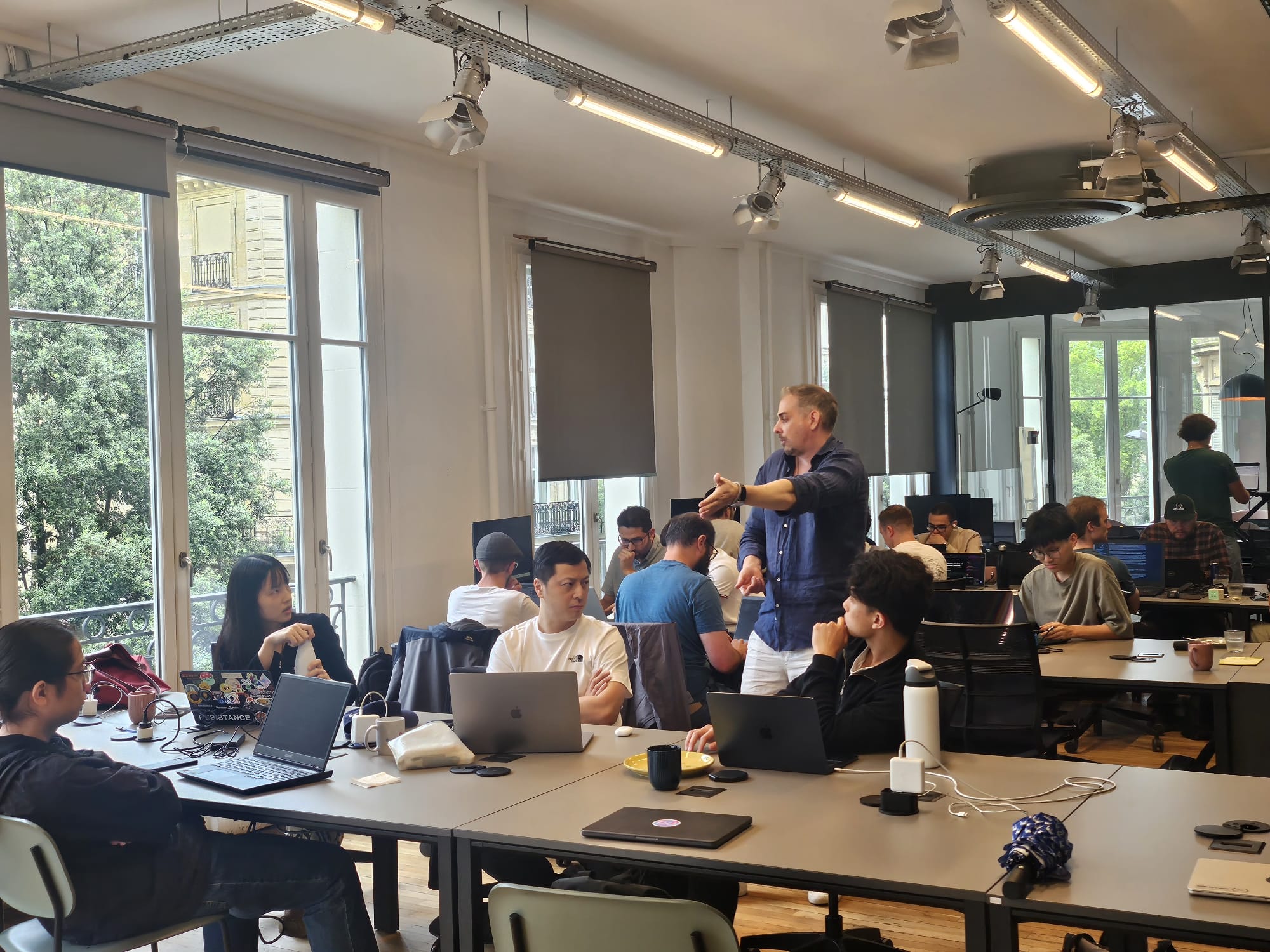
Wyn – XRPL Core Dev Bootcamp, Paris

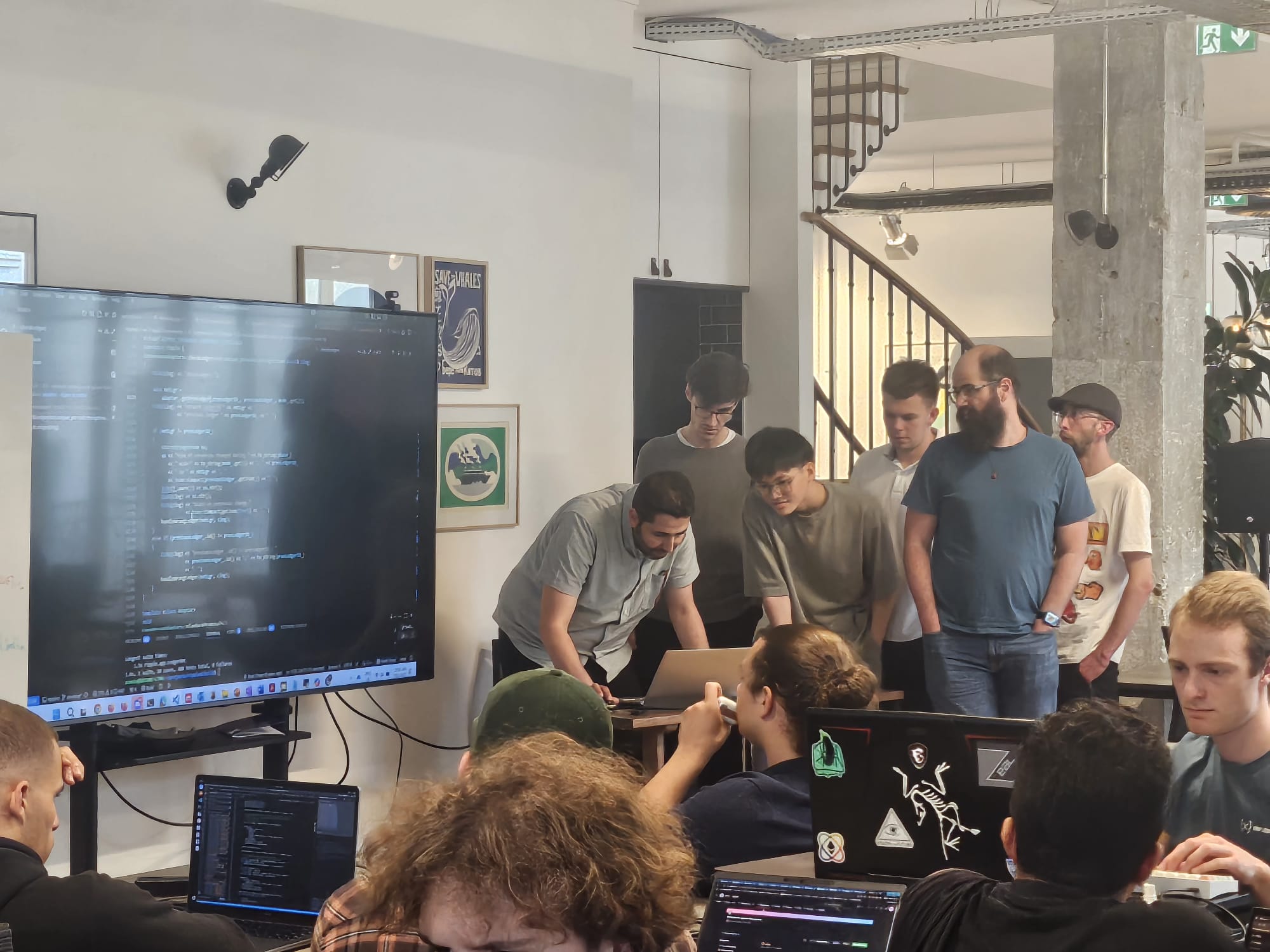
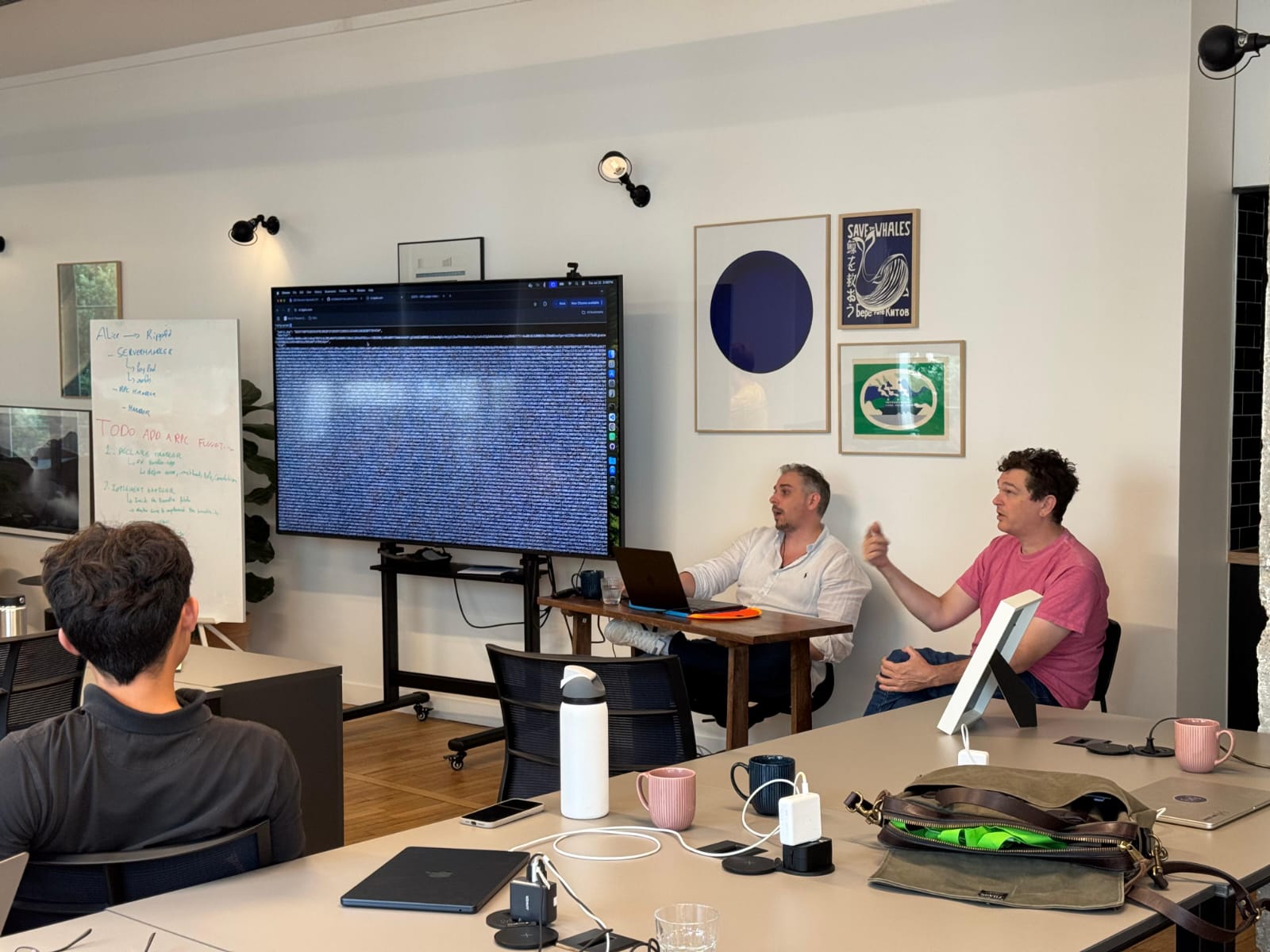
Across the world in Paris, Wyn dove into the XRPL Core Dev Bootcamp. Over two intense weeks from 11 July to 25 July, 2025, he explored the inner workings of the XRP Ledger—running validator nodes, understanding consensus mechanisms, and navigating ledger structures.

Beyond technical skills, the bootcamp offered inspiration. “Meeting cryptographers and engineers who are shaping the future of blockchain was eye-opening,” Wyn says. Collaborative projects and mentorship helped him see not just how the ledger works, but how innovation happens—through curiosity, persistence, and teamwork.

“Meeting cryptographers and engineers shaping the future of blockchain was eye-opening. It reinforced the value of curiosity and continuous learning.”

Learning, Exploring, Innovating

NUS FinTech Lab strives to offer opportunities for our interns to explore, experiment, and grow in global settings. We continue to empower our students to push boundaries, turn ideas into reality, and shape the future of FinTech.

NUS FinTech Lab Interns Take XRPL Innovation Global Read More »

Scroll to Top