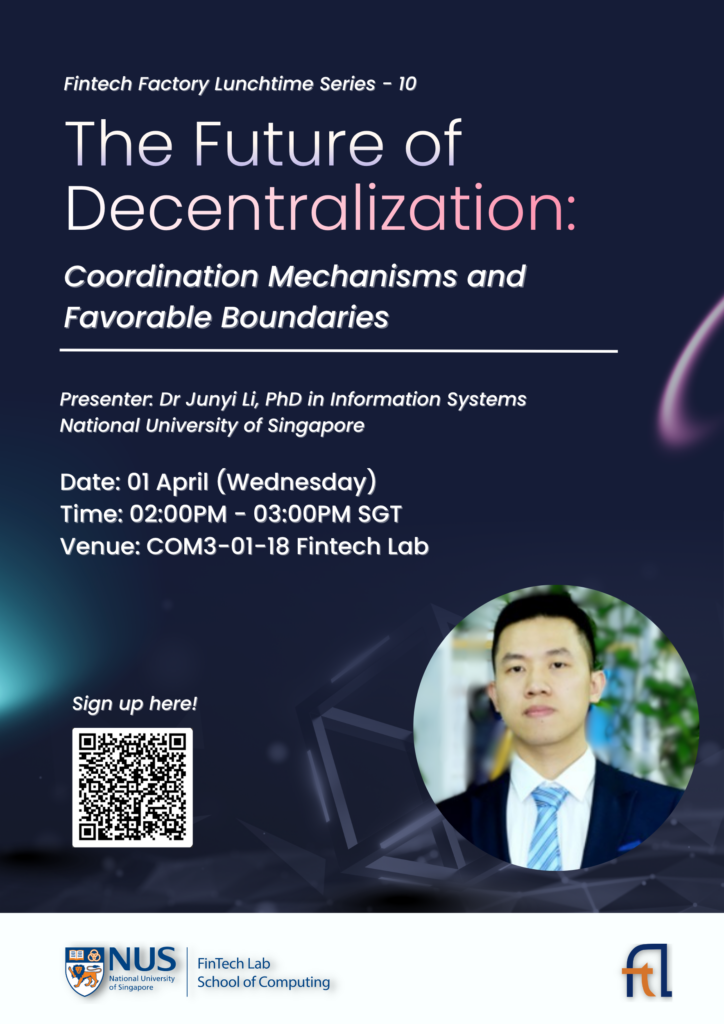
FinTech Factory Lunchtime Series – 10
The Future of Decentralization:
Coordination Mechanisms
and Favorable Boundaries
Abstract
How does collective intelligence emerge from distributed systems?
Decentralized organizing is becoming increasingly common with the rise of digital platforms, crowdsourcing systems, and blockchain governance. Yet an important challenge remains: how can collective intelligence emerge when decision-making and expertise are distributed across many individuals?
This talk examines two key aspects of decentralized systems — distributed decision rights and dispersed expertise — and presents research on how coordination mechanisms shape outcomes in DAO governance and crowdsourcing environments.
About the Speaker

Dr Junyi Li researches decentralized systems and digital governance, focusing on how coordination mechanisms shape collaboration and incentives in blockchain ecosystems. His work examines how decentralized organizations manage decision-making and developer productivity in distributed environments.
About the Series
The FinTech Factory Lunchtime Series brings together researchers and industry experts to discuss emerging developments in financial technology. Through guest talks and interactive discussions, the series explores topics such as decentralized systems, digital finance, blockchain infrastructure, and the evolving relationship between technology and financial markets.